Having access to formal definitions of concepts like “mega-crisis” and “disaster” is essential for mass communications, especially in news media coverage, where clarity and accuracy are vital.
Kirsty Cockburn, Director of Communications and Fundraising at BBC Media Action, reminded media professionals that “Media in emergency situations does more than just provide news. Communication is aid” (Cockburn, 2019).
What is a Mega-Crisis?
Yen & Salmon (2017) used what was called a “mega-crisis mapping model” to analyze the severity and complexity of a mega-crisis. The model compared a mega-crisis to its foundational concept: problem, along with its escalated forms: mess and crisis.
They ultimately defined a mega crisis as “A set of interacting crises that is severe in impact, complex in nature and global in fallout, with no distinct start and end points” (Yen & Salmon, 2017, p. 7).
What is a Disaster?
In exploring the role of mass communications in disaster coverage and highlighting vulnerabilities, Silva et al. (2025) cited the United Nations Office for Disaster Risk Reduction (UNDRR) for its definition of a disaster.
“A serious disruption of the functioning of a community or a society at any scale due to hazardous events interacting with conditions of exposure, vulnerability and capacity, leading to one or more of the following: human, material, economic and environmental losses and impacts” (UNDRR, 2017).
Mega-crises and Disasters Differ in Complexity
A mega-crisis, according to Yen & Salmon (2017), has no clear beginning or end. Mega-crises are characterized by a “prolonged limbo” due to their complexity and “waning public attention” (Yen & Salmon, 2017, p. 4).
Characteristics of a mega crisis keep mutating and its severity is not limited to the loss of lives and property, but potentially the legitimacy of the state as well.
Yen & Salmon, 2017
Disasters often have a distinct onset and recovery process, making them time-bound. These onsets can be gradual (e.g., drought, sea level rise) or sudden (e.g., hurricane, earthquake) (UNDRR, 2017). Hurricane Katrina in 2005 is an example of a disaster.
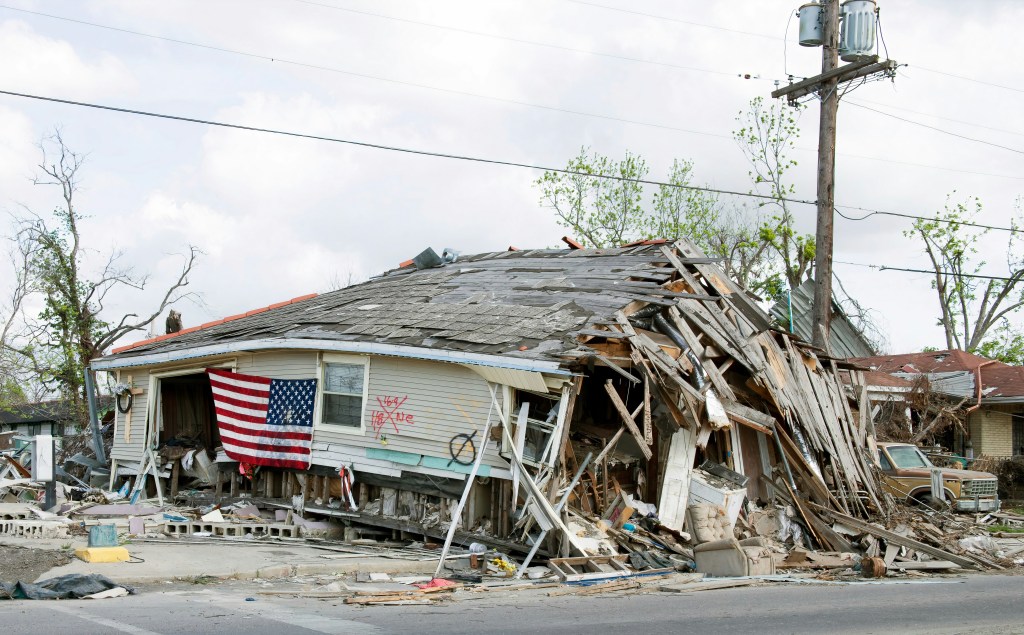
Unsplash, 2022 (Provided by Library of Congress, created in 2006)
Mega-crises and Disasters Differ in Scale and Scope
The causes and consequences of a mega-crisis can loop through political, economic, and social systems, nationally and globally. Thus, mega-crises may require an international response. A relevant example is the COVID-19 pandemic, which has impacted nations worldwide.

Unsplash, 2021
Disasters usually impact local or regional communities. This requires local, regional, and sometimes national agencies to coordinate the response.
Due to small communities often being the target of human-caused or natural disasters, “The local media assume an air of authority when events are in their own ‘backyard’ and they realize their responsibility to the community” (Miller & Goidel, 2009).
Final Thoughts
This comparative analysis helped me understand that reporting with accurate conceptual definitions is important. Choice words can influence public understanding and reactions during crises.
Keywords: mega-crisis, disaster, conceptual definitions, mass communication, news media, local media
References
Cockburn, K. (2015, December 14). Preparing for the Unexpected: Why Media Matters in Times of Disaster. [Video]. Youtube. https://www.youtube.com/watch?v=hVTco0Hkmto
Miller, A., & Goidel, R. (2009). News Organizations and Information Gathering During a Natural Disaster: Lessons from Hurricane Katrina. Journal of Contingencies & Crisis Management, 17(4), 266–273. https://doi-org.ezproxy.lib.ou.edu/10.1111/j.1468-5973.2009.00586.x
Silva, Fernando Pereira, Silva, Fernando Pereira, de Moraes, Osvaldo Luiz Leal, Marques Alves, Rita de Cassia, Barbosa, Marcia Cristina, & Marengo, José Antonio. (2025). Communication in Disaster—The Contribution of the Press to Highlighting Vulnerabilities: The Case of Rio Grande Do Sul State, Brazil. Social Sciences, 14(7), 409–428. https://doi.org/10.3390/socsci14070409
UNDRR. (2017). Terminology on Disaster Risk Reduction. Geneva: United Nations Office for Disaster Risk Reduction. https://www.undrr.org/terminology/disaster
Yen, V.Y., & Salmon, C.T. (2017). Further explication of mega-crisis concept and feasible responses. International Conference on Communication and Media: An International Communication Association Regional Conference (i-COME’16).
https://doi.org/10.1051/shsconf/20173300034
 Lindsay Ashford
Leave a comment