Category: Uncategorized

  • Fake News and Misreporting

    Today, most people get their news from social media feeds, where extreme political polarization is common. This makes media literacy crucial for audiences to distinguish fake news from real news. 

    Watch this TED Talk where Lisa Remillard, a former television journalist and current journalist influencer, discusses how to spot misinformation in the news.

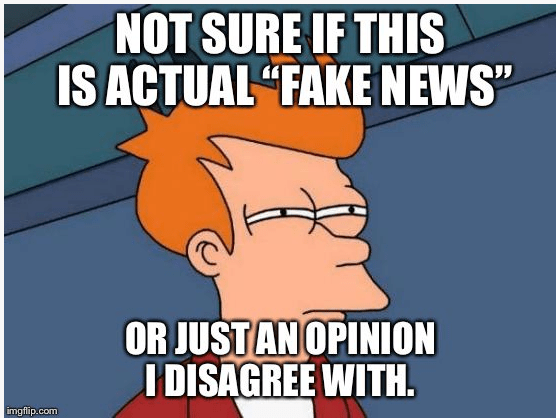
    …the term “fake news” has become highly political and is often used as a buzzword not only used to describe fabricated information but to undermine the credibility of news organizations or argue against commentary that disagrees with our own opinion…

    Molina et al., 2025. p. 184

    What is Fake News?

    Fake news is defined briefly by Molina et al. (2021) as “fabricated information that is patently false” (p. 180).

    Pexels, 2020

    Given the rising popularity and divisive nature of the concept, Molina et al. (2021) aimed to explain fake news using eight categories of online content that a machine-learning algorithm can use to determine whether a piece of information is fake news or legitimate news.

    This analysis included the following categories: “real news, false news, polarizing content, satire, misreporting, commentary, persausive information, and citizen journalism” (Molina et al., 2021, p. 186).

    Nielsen & Graves (2017) studied audience perspectives on fake news and found that “People see the difference between fake news and news as one of degree rather than a clear distinction” (p. 1).
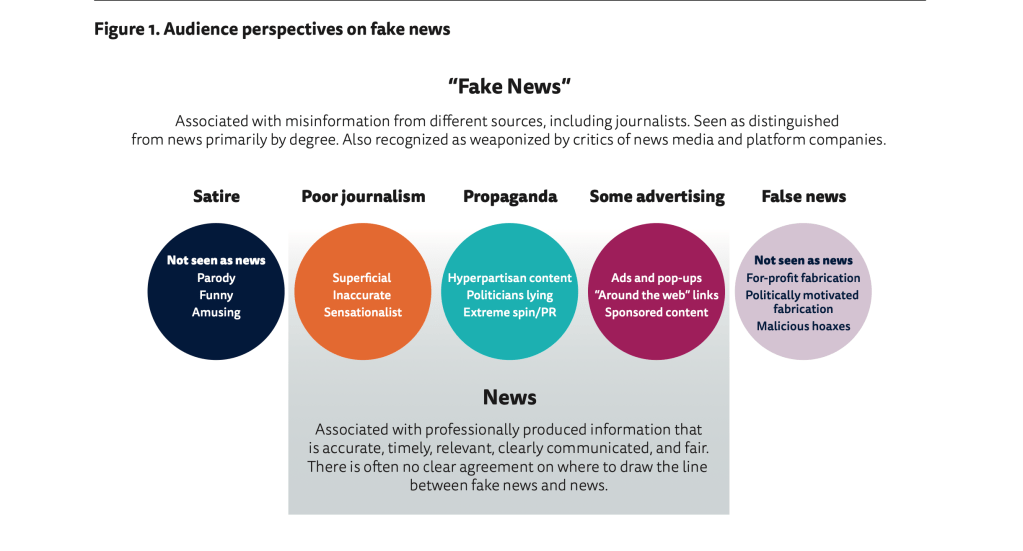
    (Nielsen & Graves, 2017, p. 3)

    What is Misreporting?

    Misreporting is a type of misinformation. Misinformation is not to be confused with disinformation. “While ‘misinformation’ can be simply defined as false, mistaken, or misleading information, ‘disinformation’ entails the distribution, assertion, or dissemination of false, mistaken, or misleading information in an intentional, deliberate, or purposeful effort to mislead, deceive, or confuse” (Fetzer, 2004, p. 231).

    Misreported information is disseminated without direct information from sources and verifiable qoutes (Molina et al., 2021).

    Key Similarities and Differences

    Understanding the difference between fake news and misreporting is crucial, as it emphasizes the need for media literacy. They differ in terms of intent, authenticity, source, and how false information is handled after being uncovered.

    Fake news is spread with the purpose of deceiving or harming the public. It involves entirely or mostly fabricated content originating from sources that do not follow editorial standards. Since the aim is to spread falsehoods, no corrections are typically made.

    Misreporting can happen even when journalists have good intentions. It involves information based on real events or facts, but is presented with errors or lacks proper context. The source of misreported information is usually a reputable news outlet. Once false information is identified, responsible outlets aim to correct or update the content they have shared. 

    Keywords: fake news, misreporting, media literacy, political polarization, social media, concept explication

    References

    Fetzer, J. H. (2004). Disinformation: The use of false information. Minds and Machines14, 231-240. doi:10.1023/B:MIND.0000021683.28604.5b

    Molina, M.D., Sundar, S.S., Le, T., & Lee, D. (2021). “Fake News” is not simply false
    information: A concept explication and taxonomy of online content. American
    Behavioral Scientist, 65(2), 180-212. https://doi.org/10.1177/0002764219878224

    Nielsen, R. K., & Graves, L. (2017). “News you don’t believe”: Audience perspectives on fake news. https://ora.ox.ac.uk/objects/uuid:6eff4d14-bc72-404d-b78a-4c2573459ab8/files/snp193c257

    Remillard, L. (2024, August 27). Media and Democracy: Finding Facts in the Mess of Misinformation | Lisa Remillard | TEDxBillings [Video]. Tedx Talks. Youtube.

  • Echo Chambers, Filter Bubbles, and the Need for Exposure Diversity

    Despite living in a hyperconnected digital world, we are exposed to fewer diverse perspectives than ever before. Personalized social media feeds foster a sense of being informed, yet they fragment the information we receive, reinforcing existing viewpoints and narrowing our exposure.

    “Specifically, the concern is that social media algorithms combine with tendencies to interact with like-minded others to create an environment that predominantly exposes users to congenial, opinion-reinforcing content to the exclusion of more diverse, opinion-challenging content” (Kitchens et al., 2020)

    Building on these concerns, Adam Greenwood asked viewers to challenge themselves and imagine a world where everyone agreed about everything. He asked us to consider a scenario in which those who disagreed with us on politics, religion, and other matters could not be seen or heard. Greenwood noted, “With algorithms deciding who we see, meet and hear online, this is becoming a reality” (Greenwood, 2019). These concerns echo broader debates around echo chambers and filter bubbles, as explored by researchers such as Kitchens et al. (2020).

    The Genesis of Echo Chambers and Filter Bubbles 

    Kitchens et al. (2020) approached the concepts of echo chambers and filter bubbles by examining their origins. These ideas originate from concerns over the role of technology and group dynamics in group polarization (Kitchens et al., 2020). 

    The authors highlight that former understandings of echo chambers and filter bubbles are reactionary and reductionist, “portray[ing] not the creation of an observable outcome, but rather the absence of an idealized one” (Kitchens et al., 2020). 

    Kitchens et al. (2020) also critique the binary assumption that individuals are either “in” or “out” of echo chambers and filter bubbles. A consideration of complex behaviors is critical to this conceptualization. 

    While Kitchens et al. (2020) do not provide single, concise definitions for echo chambers and filter bubbles, they identify two consistent features: a lack of information diversity and ideological segregation.

    Defining Echo Chambers and Filter Bubbles

    Haug et al. (2025) define echo chambers simply as spaces “where certain opinions are accepted, and others are discredited and silenced.”

    …social media communities that focus on hot-button issues such as abortion, religion, race, politics, gender, taxation, gun safety, and other social issues are more likely to become echo chambers.

    Haug et al., 2025

    Filter bubbles occur when “algorithms inadvertently amplify ideological segregation by automatically recommending content an individual is likely to agree with” (Flaxman et al., 2016).

    Unsplash, 2018

    This leads to questions about how exposure diversity functions within our media landscape. 

    What is Exposure Diversity?

    Moe et al. (2021) sought to empirically operationalize exposure diversity for the purposes of media policy regulation. 

    The researchers analyzed media repertoires, or “the entirety of media” an individual regularly uses, to “identify vulnerable groups that are currently in danger of being excluded from news and current affairs,” and readiness for public connection (Moe et al., 2021, p. 162). This analysis determined availability and structural, positional, and individual factors that may influence media use and, thus, exposure to diverse information (Moe et al., 2021). 

    Moe et al. (2021) defined exposure diversity as “the degree of diversity of news and current affairs providers in the media repertoire of different groups of citizens” (Moe et al., 2021, p. 163).

    Echo Chambers and Filter Bubbles Limit Exposure Diversity

    Echo chambers and filter bubbles develop as social media intensifies our tendency to engage mainly with like-minded individuals. This restricts exposure to differing viewpoints, resulting in intellectual isolation and polarization, and ultimately undermining informed public discourse by distorting reality. 

    Exposure diversity describes the desired outcome of media engagement. If we are to consume, our resource base should expand outside our usual bubbles, making for informed opinions on current affairs.

    Keywords: exposure diversity, echo chamber, filter bubbles, intellectual isolation, polarization, concept explication

    References

    Flaxman, S., Goel, S., Roa, J.M. (2016). Filter Bubbles, Echo Chambers, and Online News Consumption. Public Opinion Quarterly, 80(1), 298–320. https://doi.org/10.1093/poq/nfw006

    Greenwood, A. (2019 January). Challenge The Echo Chamber [Video]. TEDxRoyalTunbridgeWells. https://www.ted.com/talks/adam_greenwood_challenge_the_echo_chamber_jan_2019?utm_campaign=tedspread&utm_medium=referral&utm_source=tedcomshare

    Haug, M., Maier, C., Gewald, H., & Weitzel, T. (2025). Supporting opinions to fit in: a spiral of silence-theoretic explanation for establishing echo chambers and filter bubbles on social media. Internet Research35(7), 30–51. https://doi.org/10.1108/INTR-03-2024-0413

    Kitchens, B., Johnson, S. L., & Gray, P. (2020). Understanding Echo Chambers and Filter Bubbles: The Impact of Social Media on Diversification and Partisan Shifts in News Consumption. MIS Quarterly44(4), 1619–1649. https://doi-org.ezproxy.lib.ou.edu/10.25300/MISQ/2020/16371

    Moe, H., Hovden, J.F., & Karppinen, K. (2021). Operationalizing exposure diversity. European
    Journal of Communication
    , 36(2), 148-167. https://doi.org/10.1177/0267323120966849

  • Negativity Prevails: Political News and The Negativity Bias

    Negativity in political news can leave us feeling anxious or even angry about the state of our political climate, tracing back to a common psychological tendency: the negativity bias.

    How has negativity in political news been conceptualized?

    Lengauer et al. (2011) clarified the concept of negativity in political news by distinguishing between actor-related negativity and frame-related negativity.

    Actor-related negativity “manifests itself in portrayals of political actors’ individual performance (i.e., of parties, candidates)” (Lengauer et al., 2011, p. 189).

    In contrast, frame-related negativity “originates from characteristics of the narrative overall structure (generic frames)” (Lengauer et al., 2011, p. 189).

    Unsplash, 2023

    Frame-related negativity is further broken down into directional and non-directional forms.

    Directional negativity “draws on news framing that explicitly involves an accuser and addressee,” reflecting confrontation (Lengauer et al., 2011).

    Non-directional negativity includes framing tools such as positive or negative tone and an optimistic or pessimistic outlook, which influence the storyline (Lengauer et al., 2011).

    The Negativity Bias

    “Negativity bias has been identified as a core psychological mechanism when individuals process information such as news” (Anderson et al., 2024).

    Negativity bias is defined as “relative strength of negative over positive,” meaning people tend to give more weight to negative experiences, information, and emotions than to positive ones (Soroka & McAdams, 2015).

    Watch this interview with John Tierney, a contributing author of The Power of Bad: How The Negativity Effect Rules Us and How We Can Rule It. In key moments, Tierney discusses The Positivity Ratio and The Pollyanna Effect.

    How Negativity in Political News Impacts Audiences

    “Negativity bias is one of the most salient features of news reporting…this bias can foster anxiety about societal issues among news audiences” (Anderson et al., 2024).

    The 24/7 news cycle, filled with sensational headlines, celebrity scandals, and political conflicts, can leave audiences feeling cynical.

    News organizations can capitalize on that, prioritizing negative content that triggers stronger emotional reactions.

    Final Thoughts

    By comparing these concepts, I gained a better understanding of how our psychological biases influence modern news media. It’s important for audiences to recognize that political coverage can portray the world negatively. To counteract this, doing individual research is essential for creating a balanced and realistic perspective.

    John Tierney, highlighted in the video above, explains the Positivity Ratio, which can help determine an individual’s level of happiness. Being informed about the happenings of our nation is important, but not at the expense of one’s happiness.

    …avoiding bad is so much more important than doing good.

    Words of John Tierney (ReasonTV, 2020)

    Keywords: negativity, political news, negativity effect, negativity bias, concept explication

    References

    Andersen, K., Djerf-Pierre, M., & Shehata, A. (2024). The Scary World Syndrome: News Orientations, Negativity Bias, and the Cultivation of Anxiety. Mass Communication & Society27(3), 502–524. https://doi-org.ezproxy.lib.ou.edu/10.1080/15205436.2023.2297829

    Lengauer, G., Esser, F., & Berganza, R. (2011). Negativity in political news: A review of concepts, operationalizations, and key findings. Journalism, 13(2), 179-202. https://doi.org/10.1177/1464884911427800

    ReasonTV. (2020, January 2). The ‘Negativity Effect’ Leads to Bad Journalism, Big Government, and Busted Relationships [Video]. Youtube. https://www.youtube.com/watch?v=dGScY0QADnY

    Soroka, S., & McAdams, S. (2015). News, Politics, and Negativity. Political Communication32(1), 1–22. https://doi-org.ezproxy.lib.ou.edu/10.1080/10584609.2014.881942

  • Interactivity and Interpassivity: Use of Digital Media

    Is there only an illusion of user control and positive experience on digital media platforms?

    In this week’s blog, I explore the concepts of interactivity and interpassivity, and how these phenomena shape our online experiences. 

    “An interesting paradox characterises our use of digital media: While, on the one hand, we welcome the interactivity they offer and actively engage with them, we also want them to automate several aspects of our experience so that we do not have to actively make choices and participate” (Chen et al, 2024).

    What is Interactivity?

    In the rise of “new media,” during the dawn of the Internet, the concept of interactivity was used to distinguish these new technologies. However, it was rarely clearly defined. 

    Kiousis (2002) aimed to establish both conceptual and operational definitions of interactivity as a media and psychological variable.

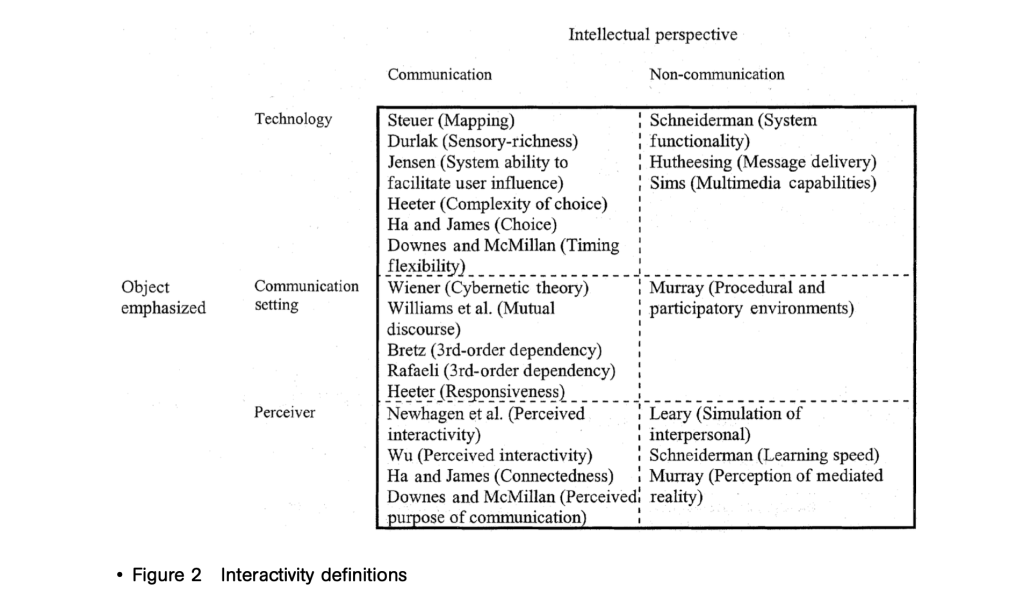
    To navigate through the diverse literature on interactivity and ultimately arrive at a formal conceptual definition, Kiousis (2002) used a table organizing the literature based on the emphasized object and the intellectual perspective.

    (Kiousis, 2002, p. 366)

    Thus, interactivity was defined as “the degree to which a communication technology can create a mediated environment in which participants can communicate (one-to-one, one-to-many, and many-to-many), both synchronously and asynchronously, and participate in reciprocal message exchanges (third-order dependency). With regard to human users, it additionally refers to their ability to perceive the experience as a simulation of interpersonal communication and increase their awareness of telepresence” (Kiousis, 2002, p. 372).

    How is interactivity defined elsewhere?

    Chou (2003) examined interactivity in communication technology. He defined interactivity along two dimensions: a) people can send and receive both verbal and nonverbal messages and feedback, rather than just send or passively receive, and b) it provides access to multimedia.

    What is Interpassivity?

    Chen et al. (2024) define interpassivity as a “technological affordance which allows users to delegate or outsource the task to a machine, thereby obviating the need for active participation” (Chen et al., 2024). Users, in turn, experience gratification.

    Key components of interpassivity are automation and delegated enjoyment.

    Listen to this podcast featuring Rober Pfaller, the philosopher behind the concept of interpassivity:

    How do interactivity and interpassivity coexist?

    Interactivity and interpassivity represent a complex relationship where users delegate engagement through automated features while still maintaining control by overriding or controlling aspects of the digital platform.

    To experience interactivity digitally, users must “respond to the content or functions provided by an automated feature” (Chen et al., 2024).

    For example, social media platforms have interactive features like liking and commenting, and interpassive features such as curated feeds generated by algorithms. This allows users to feel present with minimal effort.

    Unsplash, 2024

    Interactivity vs. Interpassivity: Key Differences

    With interactivity, users are active participants. The actions and experiences on the digital platform is centered on the user.

    In contrast, interpassivity describes users as passive observers, with their actions and experiences outsourced to another entity.

    “The interpassive subject desperately wants to remain ‘loyal’, or true, to the interactive relation, yet indicates a desire to be released from its burden” (Oenen, 2008, p. 12).

    Final Thoughts

    My comparison of these concepts challenges the idea that active engagement, or interactivity, is always positive. We are often happy to delegate tasks in order to give the appearance of interacting.

    Keywords: interactivity, interpassivity, engagement, delegation, digital platforms, communication, concept explication

    References

    Chen, C., Lee, S., & Sundar, S. S. (2024). Interpassivity instead of interactivity? The uses and gratifications of automated features. Behaviour & Information Technology43(4), 717–735. https://doi.org/10.1080/0144929X.2023.2184174

    Chou, C. (2003). Interactivity and interactive functions in web-based learning systems: a technical framework for designers. British Journal of Educational Technology34(3), 265–279. https://doi.org/10.1111/1467-8535.00326

    Kiousis, S. (2002). Interactivity: A Concept Explication. New Media & Society, 4(3), 355-383. https://doi.org/10.1177/146144480200400303

    Oenen, G.V. (2008). Interpassivity revisited: a critical and historical reappraisal of interpassive phenomena. International Journal of Zizek Studies, 2(2). https://zizekstudies.org/index.php/IJZS/article/viewFile/80/77#:~:text=In%20sum%2C%20interpassivity%20is%20an,against%2C%20but%20merely:%20present.&text=Simmel%2C%20G.,Band%209%2C%20185%2D206.

    Žižek, S. (2023, August 20). Žižek & Interpassivity w/ Robert Pfaller [Audio podcast episode]. Žižek And So On. Spotify. https://open.spotify.com/episode/4VhEk23M9Zfv7SNvdqCzDr?si=b7e24cf4cf694214

  • News Literacy: Combating Fake News

    As social media platforms, AI-generated content, and constant streams of information change how we consume news, news literacy has become increasingly important. Our ability to distinguish fact from fake news forms the foundation.

    News literacy research and practice is at a tipping point. 

    Tully et al., 2022, p. 1601

    What is News Literacy?

    As the demand for news literacy grows, the need for a formal conceptual definition presents itself. 

    News literacy is defined as “knowledge of the personal and social processes by which news is produced, distributed, and consumed, and skills that allow users some control over these processes” (Tully et al., 2022, p. 1593).

    News literacy can be divided into five knowledge and skills domains.

    Context refers to “the social, legal, and economic environment in which the news is produced” (Tully et al., 2022, p. 1593).

    Unsplash, 2021

    Creation means “the process in which journalists and other actors engage in conceiving, reporting and creating news” (Tully et al., 2022, p. 1595). In the evolving digital landscape, the creator can be human or non-human (machine-generated).

    Content describes “the qualitative characteristics of a news story or piece of news that distinguishes it from other types of media content” (Tully et al., 2022, p. 1597). The ability to recognize news as unique from other types of content is essential to news literacy.

    Circulation involves “the process through which news is distributed and spread among potential audiences” (Tully et al., 2022, p. 1598).

    Consumption pertains to “the personal factors that contribute to news exposure, attention and evaluation and recognition of the effects of such consumption” (Tully et al., 2022. p. 1599). Key to consumption is individual choices in news selection, compared to circulation, which is a systemic process.

    News Literacy Defined Elsewhere

    Taking a different approach, researching algorithmic news and echo chambers and their impact on news literacy, Du (2023) defined news literacy as “how and why people use news media, how they make sense of what they consume, and how individuals are affected by their own news consumption” (Du, 2023).

    Like Tully et al. (2022), this definition emphasizes individual knowledge and skills, as well as the need to control one’s news consumption.

    What is Fake News?

    Fake news can be understood conceptually through two categories: misinformation and disinformation. Their difference lies in intent (Rubin, 2019).

    “Misinformation is unintentional and includes errors or inaccuracies, while disinformation is deliberately deceptive, false or misleading” (Rubin, 2019, p. 1015).

    Combatting the Negative Effects of Fake News

    Fake news is often designed to cause division, confusing fact with fiction.

    News literacy is a skill set and a combative tool against fake news. Utilizing the context, creation, content, circulation, and consumption encourages critical thinking and discernment of fact versus fiction.

    Bogan, 2019

    Watch the following video on cleansing our news diet and healing our worldview through consuming “real journalism that investigates progress and helps us understand how issues are being dealt with” (Jackson, 2022).

    Keywords: news literacy, fake news, misinformation, disinformation, concept explication

    References

    Bogan, K. (2019, January 19). 2019 Goal – More News Literacy. Don’t Shush Me. https://dontyoushushme.com/2019/01/19/2019-goal-more-news-literacy/

    Du, Y. R. (2023). Personalization, Echo Chambers, News Literacy, and Algorithmic Literacy: A Qualitative Study of AI-Powered News App Users. Journal of Broadcasting & Electronic Media67(3), 246–273. https://doi-org.ezproxy.lib.ou.edu/10.1080/08838151.2023.2182787

    Jackson, J. (2022, November 2). Beyond Fake News: How to Heal a Broken Worldview. [Video]. Youtube. https://youtu.be/VeDAlYYlbbk?si=w5uUv4OxV5w8K6V4

    Rubin, V. L. (2019). Disinformation and misinformation triangle: A conceptual model for “fake news” epidemic, causal factors and interventions. Journal of Documentation75(5), 1013–1034. https://doi-org.ezproxy.lib.ou.edu/10.1108/JD-12-2018-0209

    Tully, M., Maksl, A., Ashley, S., Vraga, E.K., & Craft, S. (2022). Defining and conceptualizing news literacy. Journalism, 23(8), 1589-1606. https://doi.org/10.1177/14648849211005888

  • Artificial Intelligence in Journalism

    With growing concerns that the future of journalism may shift away from human-created content, it is essential to conceptualize artificial intelligence (AI) in journalism. This trend might require journalism professionals to become skilled in both journalistic techniques and technology.

    “Journalism, and more broadly, communication, has been the exclusive enterprise of humanity until now” (Owsley, 2022, p. 11). 

    Listen to this podcast about how AI is disrupting the journalism industry.

    How is AI defined in journalism, and what role does it play?

    Chad Owsley (2022) wrote “Artificial Intelligence as Agent in Journalism: A Concept Explication,” and concluded that “Artificial Intelligence functioning as an agent in journalism is an intelligent machine capable of imitating human journalistic intelligence, values, thinking, and/or behavior at a high level of fidelity with no human involvement required beyond initial programming” (Owsley, 2022, p. 14).

    Unsplash, 2020

    Furthermore, Owsley (2022) notes that perhaps the best way to connect the concepts of “journalism” and “artificial intelligence” is to recognize where they intersect. “AI and Journalism intersect at the journalist. More specifically, they intersect at the journalist’s communication” (Owsley, 2022, p. 11).

    AI in journalism began as a helpful tool for daily tasks. Over time, Owsley (2022) states, the goal is for AI to eventually replace human-created reporting in the journalism industry.

    If artificial general intelligence is realized, human programming may not even be required. That would give artificial intelligent [sic] agents full true autonomy in the production of journalism.

    Owsley, 2022, p. 12

    Exo-Journalism and the Exo-Journalist

    Exo-journalism combines neighboring concepts such as robo-journalism, computational journalism, and automated journalism (Gutierrez-Caneda et al., 2023)

    In conceptualizing exo-journalism, Tejedor & Vila (2021) compared it to an exoskeleton, “an element that serves as a support and is used to assist the movements and/or increase the capabilities of the human body” (Tejedor & Vila, 2021, p. 833). 

    This idea suggests that exo-journalism is not necessarily meant to augment a journalist’s work but to “support and assist the work and increase the possibilities/capabilities of the journalist” (Tejedor & Vila, 2021, p. 833). 

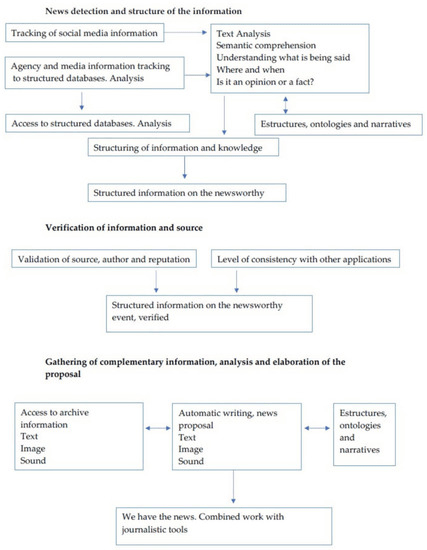
    Tejedor & Vila (2021) outlined five stages of work dynamics that an exo-journalist would follow.

    Tejedor & Villa (2021)

    Key Similarities and Differences

    Both the idea of AI as an agent in journalism and exo-journalism rely on AI during the process of journalistic content creation.

    Where these concepts differ is that artificial/automated journalism is produced with minimal human input.

    Exo-journalism, on the other hand, is a process of AI’s assistance to human journalists in news detection, source verification, and analysis. In exo-journalism, technology is a partner rather than the primary storyteller.

    Final Thoughts

    Comparing these concepts helped me understand the future of AI in journalism and its implementation in reporting without removing the human journalist entirely.

    Key Words: artificial intelligence, journalism, exo-journalism, exo-journalist, concept explication

    References

    Gutiérrez-Caneda, B., Vázquez-Herrero, J., & López-García, X. (2023). AI application in journalism: ChatGPT and the uses and risks of an emergent technology. El Profesional de La Información, 32(5), 1–16. https://doi-org.ezproxy.lib.ou.edu/10.3145/epi.2023.sep.14

    Owsley, C.S. (2022). Artificial intelligence as agent in journalism: A concept explication. International Communication Association Conference, (72nd). Paris, France. https://csowsley.com/wp-content/uploads/2022/05/Owsley-2022-Artificial-Intelligence-as-Agent-in-Journalism-A-.pdf

    Tejedor, S., Vila, P. (2021). Exo Journalism: A Conceptual Approach to a Hybrid Formula Between Journalism and Artificial Intelligence. Journalism and Media, 2(4), 830-840. https://doi.org/10.3390/journalmedia2040048 

  • Mega-Crises and Disasters: The Importance of Distinction in News Media

    Having access to formal definitions of concepts like “mega-crisis” and “disaster” is essential for mass communications, especially in news media coverage, where clarity and accuracy are vital.

    Kirsty Cockburn, Director of Communications and Fundraising at BBC Media Action, reminded media professionals that “Media in emergency situations does more than just provide news. Communication is aid” (Cockburn, 2019).

    What is a Mega-Crisis?

    Yen & Salmon (2017) used what was called a “mega-crisis mapping model” to analyze the severity and complexity of a mega-crisis. The model compared a mega-crisis to its foundational concept: problem, along with its escalated forms: mess and crisis. 

    They ultimately defined a mega crisis as “A set of interacting crises that is severe in impact, complex in nature and global in fallout, with no distinct start and end points” (Yen & Salmon, 2017, p. 7). 

    What is a Disaster?

    In exploring the role of mass communications in disaster coverage and highlighting vulnerabilities, Silva et al. (2025) cited the United Nations Office for Disaster Risk Reduction (UNDRR) for its definition of a disaster. 

    “A serious disruption of the functioning of a community or a society at any scale due to hazardous events interacting with conditions of exposure, vulnerability and capacity, leading to one or more of the following: human, material, economic and environmental losses and impacts” (UNDRR, 2017)

    Mega-crises and Disasters Differ in Complexity

    A mega-crisis, according to Yen & Salmon (2017), has no clear beginning or end. Mega-crises are characterized by a “prolonged limbo” due to their complexity and “waning public attention” (Yen & Salmon, 2017, p. 4).

    Characteristics of a mega crisis keep mutating and its severity is not limited to the loss of lives and property, but potentially the legitimacy of the state as well.

    Yen & Salmon, 2017

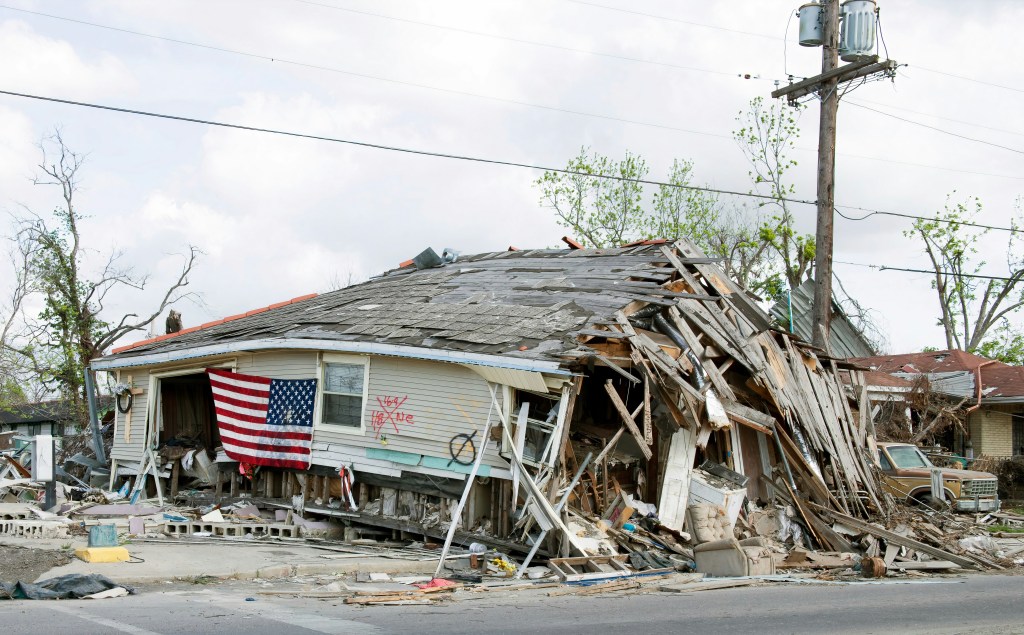
    Disasters often have a distinct onset and recovery process, making them time-bound. These onsets can be gradual (e.g., drought, sea level rise) or sudden (e.g., hurricane, earthquake) (UNDRR, 2017). Hurricane Katrina in 2005 is an example of a disaster.

    Unsplash, 2022 (Provided by Library of Congress, created in 2006)

    Mega-crises and Disasters Differ in Scale and Scope

    The causes and consequences of a mega-crisis can loop through political, economic, and social systems, nationally and globally. Thus, mega-crises may require an international response. A relevant example is the COVID-19 pandemic, which has impacted nations worldwide.

    Unsplash, 2021

    Disasters usually impact local or regional communities. This requires local, regional, and sometimes national agencies to coordinate the response.

    Due to small communities often being the target of human-caused or natural disasters, “The local media assume an air of authority when events are in their own ‘backyard’ and they realize their responsibility to the community” (Miller & Goidel, 2009).

    Final Thoughts

    This comparative analysis helped me understand that reporting with accurate conceptual definitions is important. Choice words can influence public understanding and reactions during crises.

    Keywords: mega-crisis, disaster, conceptual definitions, mass communication, news media, local media

    References

    Cockburn, K. (2015, December 14). Preparing for the Unexpected: Why Media Matters in Times of Disaster. [Video]. Youtube. https://www.youtube.com/watch?v=hVTco0Hkmto

    Miller, A., & Goidel, R. (2009). News Organizations and Information Gathering During a Natural Disaster: Lessons from Hurricane Katrina. Journal of Contingencies & Crisis Management17(4), 266–273. https://doi-org.ezproxy.lib.ou.edu/10.1111/j.1468-5973.2009.00586.x

    Silva, Fernando Pereira, Silva, Fernando Pereira, de Moraes, Osvaldo Luiz Leal, Marques Alves, Rita de Cassia, Barbosa, Marcia Cristina, & Marengo, José Antonio. (2025). Communication in Disaster—The Contribution of the Press to Highlighting Vulnerabilities: The Case of Rio Grande Do Sul State, Brazil. Social Sciences, 14(7), 409–428. https://doi.org/10.3390/socsci14070409

    UNDRR. (2017). Terminology on Disaster Risk Reduction. Geneva: United Nations Office for Disaster Risk Reduction. https://www.undrr.org/terminology/disaster

    Yen, V.Y., & Salmon, C.T. (2017). Further explication of mega-crisis concept and feasible responses. International Conference on Communication and Media: An International Communication Association Regional Conference (i-COME’16).
    https://doi.org/10.1051/shsconf/20173300034

  • Synergy and Cross-Media Convergence: A Comparative Analysis

    Goodwin (2016) defines synergy in media as the use of “a variety of mediums in order to have a maximum impact on the consumer” (Goodwin, pg. 22, 2016). This concept explication highlights Walt Disney’s practices in synergy, as the conglomerate has successfully employed “the five strategies of implementation: Merchandising, intertextuality, placement, theming, and simulacra…” (Goodwin, pg. 22, 2016). This application of synergy in media practices places the audience, or the consumers, at its core.

    New researchers posit that the audience is not just a component of the process, but the element that creates the synergy as it is the audience making the mental connection.

    Goodwin, 2016

    Cross Media Convergence

    Khan and Din (2022), studying the causes and effects of convergence in media, define it as “the means of merging previously distinct outlets of media like print, TV, radio, etc., powered by the Internet and computers” (Khan & Din, pg. 123, 2022).

    While researching cross-media convergence, I realized how relatively new this phenomenon is. The video below, published 11 years ago, shows just how groundbreaking it was to see social media—once a silo in the media world—become the glue for most modern marketing campaigns today.

    Key Differences and Similarities

    While synergy can be seen as the impact when different elements work together, cross-media convergence is the actual combination of media elements made possible by the digitization of media content.

    Media synergy—the added value of a medium as a result of the presence of another medium—is considered a possible main advantage of cross-media advertising.

    Voorfeld et al., 2013

    Synergy can also include non-media elements such as merchandise and “physical environments such as theme parks, casinos, and even residential communities to communicate and reinforce brand messages” (Olson, 2008).

    Goodwin’s (2016) example of Walt Disney theme parks + consumer products + interactive elements is a great example of synergy through non-media elements.

    Cross-media convergence, in comparison, focuses solely on integrating digital media platforms such as television and social media to deliver content.

    Both synergy and cross-media convergence have the same end goals: to reach a wider audience, foster engagement, and, hopefully, maximize profits.

    Final Thoughts on Synergy vs. Cross-Media Convergence

    Comparing these two concepts revealed the relationship, but, more importantly, it clarified the scope of synergy.

    Synergy does not depend on the presence of converged digital media platforms. Convergence is one direction to achieving synergy, but not the only one.

    Keywords: media synergy, cross-media convergence, media platforms, integration, audience, concept explication

    References

    Goodwin, J. (2016). Synergy: A concept explication. Association for Business Communication. National Communication Association Conference, Philadelphia, PA. https://www.researchgate.net/publication/308237702_A_Concept_Explication_of_Synergy

    Khan, A., Din, H. (2022). Convergence in Media: Understanding its Cause and Effect. Journal of Education: Rabindra Bharati University, 6(1), 122-130. https://www.researchgate.net/publication/362546068_Convergence_in_Media_Understanding_its_cause_and_effect

    Olson, S. R. (2004). The Extensions of Synergy: Product Placement Through Theming and Environmental Simulacra. Journal of Promotion Management10(1–2), 65–87. https://doi.org/10.1300/J057v10n01_06

    Voorveld, H., Smit, E., Neijens, P. (2013). Cross-media Advertising: Brand Promotion in an Age of Media Convergence. In Diehl, S., Karmasin, M., Media and Convergence Management. Springer-Verlag Berlin Heidelberg. https://doi.org/10.1007/978-3-642-36163-0_9

  • Concept Explication in Communications Research: How Media Professionals Approach Conceptual Definitions

    To set the stage, I have provided a video on the art and science of conceptual thinking. My hope is to provide any future researchers with the ‘why’ behind conceptual explication.

    Serena Miller (2023) introduced a seven-step framework for clarifying concepts and developing definitions for measurement and research. 

    Step I. Collect and Record Relevant Conceptual Interpretations of Construct. 

    The initial step in defining a concept involves thematic analysis, or becoming familiar with themes of relevant scholarly literature. Reviewing existing literature helps researchers understand the concept’s previous definitions and interpretations. Researchers should be transparent about their search process, documenting databases like Google Scholar and keywords used, as this sampling influences the content examined.

    Rodgers and Knafl (2000) examined concept development in nursing. Although the field differs greatly from mass communications, the process follows the same steps. Regarding the literature search, “Ultimately, the goal is to gain comprehensive command of the literature dealing with the concept and to acquire a deep grasp and understanding of it as it has been used across disciplines and over time” (Rodgers & Knafl, 2000).

    a. Formal Conceptual Definitions

    After collecting sources, researchers should seek formal definitions of the concept. These can be found through explicit scholarly definitions, “concept descriptions, concept measures, and non-scholarly concept definitions” (Miller, 2023).

    b. Concept Descriptions

    Researchers may encounter a challenge when other scholars do not provide clear definitions. In such cases, analyzing how the researcher describes the content in their writing can help.

    c. Concept Measures

    When conceptual definitions are absent, examining the measures or scale items used can be helpful. Grouping and reviewing scale items for patterns can aid in inferring the meaning of the concept.

    d. Popular Literature

    Reviewing popular literature can also assist in defining a concept. Public discourse on emerging phenomena may give “shape to the concept” (Miller, 2023).

    Unsplash, 2018

    e. Non-scholarly Definitions

    Researchers may consult non-scholarly sources like dictionaries or legal definitions when faced with mixed interpretations of their concept.

    Step II. Thematically Map Conceptual Definitions. 

    This step involves collecting all definitions from relevant sources into a table that lists citations and verbatim definitions. The table should also identify key terms and note the field or discipline. From this, researchers can identify core characteristics and themes across sources.

    Step III. Map Neighboring Concepts to Determine Boundaries.

    After completing the definitions table, researchers should map related, similar, or polar concepts. This helps ensure discriminant validity, or the concept’s distinctness from others. Miller (2023) also recommends placing the concept within a nomological framework to map out causes and effects, aiding in assessing its theoretical usefulness.

    Jacob Ormen’s (2021) explication of ‘engagement’ approaches concept mapping through semantic network analysis.

    Ormen, 2021

    Step IV. Evaluate State of Conceptual Definitions.

    When proposing a new or revised definition, researchers should explain its purpose. A definition built from terms of scientific utility is more defensible (Miller, 2023).

    Step V. Present Existing, Modified, or New Formal Conceptual Definition.

    The goal here is to provide a clear, concise, and practical formal definition that encourages its adoption.

    Step VI. Content Validate Conceptual Definitions.

    Researchers should seek validation from scholars and experts to confirm that their definition is scientifically accepted and useful.

    Step VII. Refine and Present Formal Conceptual Definition.

    The final step involves refining the concept to ensure it is “valid and mutually understood,” then presenting it (Miller, 2023). 

    Reflection

    The idea of turning abstract, loosely defined concepts into ones that are rigorously defined is intimidating. This seven-step framework, presented by Miller (2023), ensures precision by breaking the process down into steps.

    Of course, there are limitations to this process, such as its time-intensive quality and risk of oversimplifying a term, possibly stripping the concept of its complexity. 

    What are other scholars’ perspectives on concept development?

    McLeod and Pan (2004) presented seven techniques for defining a concept. Researchers can approach this process as one that is common practice in conversation. 

    Defining a term is a frequently occurring communicative activity in our everyday life. It happens whenever we try to answer ‘what do you mean’ kinds of questions.

    (McLeod & Pan, 2004)

    Steven H. Chaffee (1991) described concept explication as an iterative process. He states that the process that a researcher undergoes to define a concept “can never be considered complete” (Chaffee, 1991).

    This is not, however, a recipe through which one proceeds step-by-step in the sense of the investigator ‘being done’ with one stage once he or she has moved on to the next.

    (Chaffee, 1991)

    How will Miller’s model influence my own approach to concept explication?

    It is important not only to summarize this framework but also to consider how to apply it. Rather than diving headfirst into concept explication, I can approach it systematically. After following the seven steps Miller (2023) provides, only then would I begin to draft a formal definition.

    My Suggestions for Future Researchers 

    Considering the limitations of this framework I provided earlier, I suggest that future researchers be cautious of oversimplification. While creating a concise concept definition that includes essential wording is important for its application to research, the definition should still reflect the complexity of the construct. Approaching concept explication as a collaborative process will support creating a balanced formal definition. 

    Keywords: concept explication, concept development, formal conceptual definition, measurement, communications research, mass communications

    References

    Chafee, S.H. (1991). Explication. Communication Concepts I. Sage Publications.

    McLeod, J. M., & Pan, Z. (2004). Concept explication and theory construction. InS. Dunwoody, L.B. Becker, D.M. McLeod, & G.M. Kosicki, The evolution of key mass communication concepts. Honoring Jack M. McLeod. Hampton Press. 

    Miller, S. (2023). A framework for evaluating and creating formal conceptual definitions: A concept explication approach for scale developers. In Ford, L.R., & Scandura, T.A., The Sage handbook of survey development and application. Sage Publications, Limited.

    Ormen, J. (2021). Explicating engagement: An exploratory mapping and critical discussion of a contested concept. Participations: Journal of Audience and Reception Studies, 18(1), 244-265. https://www.participations.org/18-01-14-ormen.pdf

    Rodgers, B.L., Knafl, K.A. (2000). Concept Development in Nursing: Foundations, Techniques, and Applications. Second Edition. In Schwartz-Barcott, D., & Kim, H. S., An expansion and elaboration of the hybrid model of concept development. W.B. Saunders Company. https://www.researchgate.net/publication/285868499_An_expansion_and_elaboration_of_the_hybrid_model_of_concept_development